
Time Charter Party Contracts Under English Law: Navigating BIMCO Standards, Offshore Operations, and Geopolitics in Turkish Waters
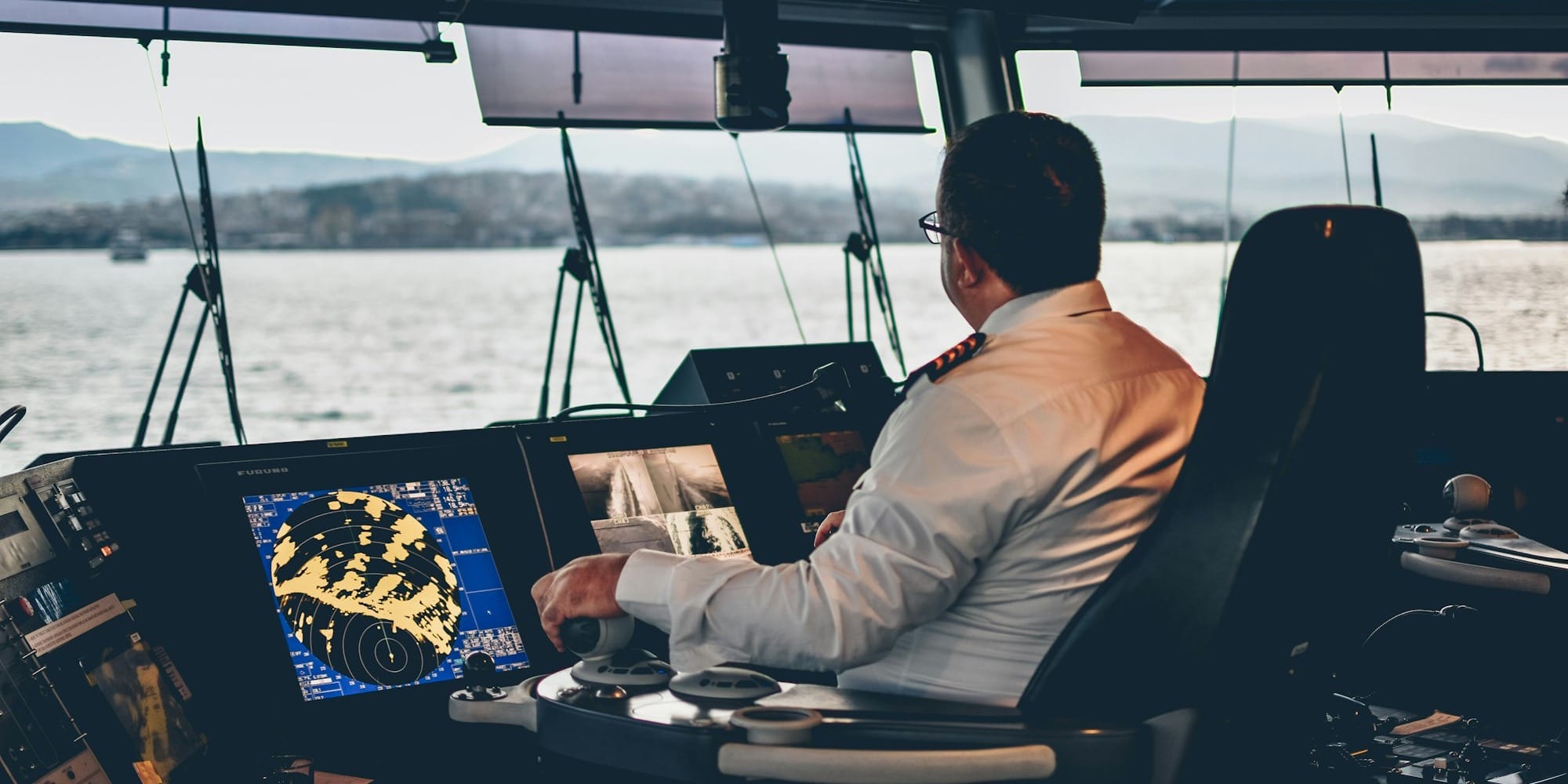
In international maritime trade across Europe, the Middle East, and North Africa (EMEA), standard BIMCO time charter forms, such as GENTIME, BALTIME, NYPE 2015, and the offshore-specific SUPPLYTIME 2017, form the backbone of maritime commercial commitments. Almost universally governed by English law, these contracts provide predictable commercial terms, balanced liability regimes, and established arbitration frameworks in London.
However, when vessels enter Turkish territorial waters and transit the Turkish Straits (the Bosphorus and Dardanelles) en route to the Black Sea, English legal principles collide with strict Turkish administrative laws, environmental regulations, and the intense geopolitical pressures of the Russia-Ukraine war.
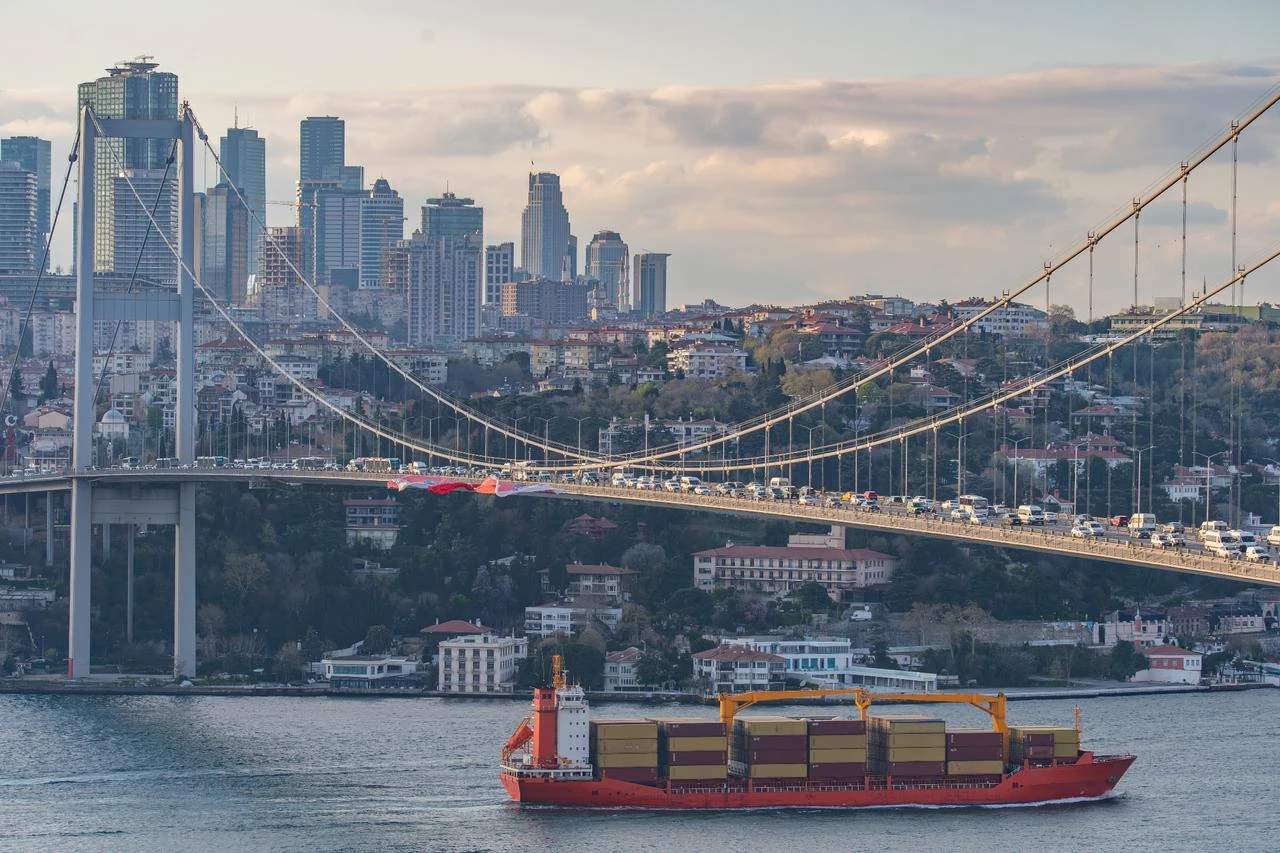
1. Turkish Straits Transit & Waiting Time: BALTIME vs. GENTIME vs. NYPE
Transit through the Turkish Straits is governed internationally by the 1936 Montreux Convention and administered domestically under the Maritime Traffic Regulations for the Turkish Straits. Deepening congestion, strict daylight-only transit rules for large tankers, and local Vessel Traffic Services (VTS) scheduling frequently result in delays spanning several days.
Operational Risk Matrix
| Operational Factor | Owner’s Allocation (English Law / BIMCO) | Charterer’s Allocation (English Law / BIMCO) |
| Vessel Readiness | Maintaining seaworthiness, engine power, steering gear readiness, and complying with VTS. | Directing commercial employment, voyage sequence, and paying bunker consumption during transit. |
| Routine Congestion | Vessel remains ON-HIRE. Owner provides vessel capacity; delays are commercial operational risks. | Charterer pays continuous hire and covers transit dues, sanitary taxes, and agency fees. |
| Mechanical Breakdown | Vessel falls OFF-HIRE. Under GENTIME Cl. 13, BALTIME Cl. 11(A), or NYPE Cl. 17. | Entitled to deduct hire for net time lost, plus reimbursement for wasted bunkers consumed. |
- Continuous Hire Rule: Under English law, hire continues uninterrupted unless the charterer can fit the delay into a specific, express off-hire exception.
- BALTIME 1939 / 2001 (Clause 11): Strongly favors owners. Unless a delay is caused by an actual breakdown of machinery or a deficiency of crew, time continues to count during VTS queues or weather holds.
- GENTIME (Clause 13) & NYPE 2015 (Clause 17): These modern forms use broader "any other cause" wording. While normal convoy delays do not suspend hire, a formal administrative detention by Turkish authorities for documentation issues can trigger off-hire.
2. The Offshore Paradigm: SUPPLYTIME 2017 and "Knock-for-Knock" Liability
The development of Turkey's domestic energy sector, particularly the Sakarya Gas Field in the Black Sea and ongoing seismic exploration in the Eastern Mediterranean, relies heavily on Offshore Support Vessels (OSVs), pipe-layers, and survey ships. These vessels almost exclusively operate under BIMCO SUPPLYTIME 2017.
The Knock-for-Knock Collision with Turkish Law
The defining feature of SUPPLYTIME 2017 is its "knock-for-knock" liability regime (Clause 14). Under English law, this displaces traditional fault-based liability: the shipowner and the charterer each agree to bear responsibility for damage to their own property and injury to their own personnel, regardless of negligence. However, this creates severe friction in Turkish waters:
- Administrative Non-Recognition: Turkish port authorities and administrative courts do not recognize private knock-for-knock agreements when enforcing state laws (such as pollution fines or customs penalties). If an OSV causes an incident, the Turkish state pursues the registered shipowner on a strict-liability basis.
- English Law Indemnity Recovery: If a shipowner is fined by Turkey for an incident that, under the SUPPLYTIME knock-for-knock regime, should technically fall within the "Charterer's Group" risks (e.g., damage caused by charterer-provided offshore equipment), the owner must pay the Turkish authorities first. The owner must then seek an indemnity from the charterer in London arbitration.
3. Environmental Fines & The Threat of Administrative Arrest
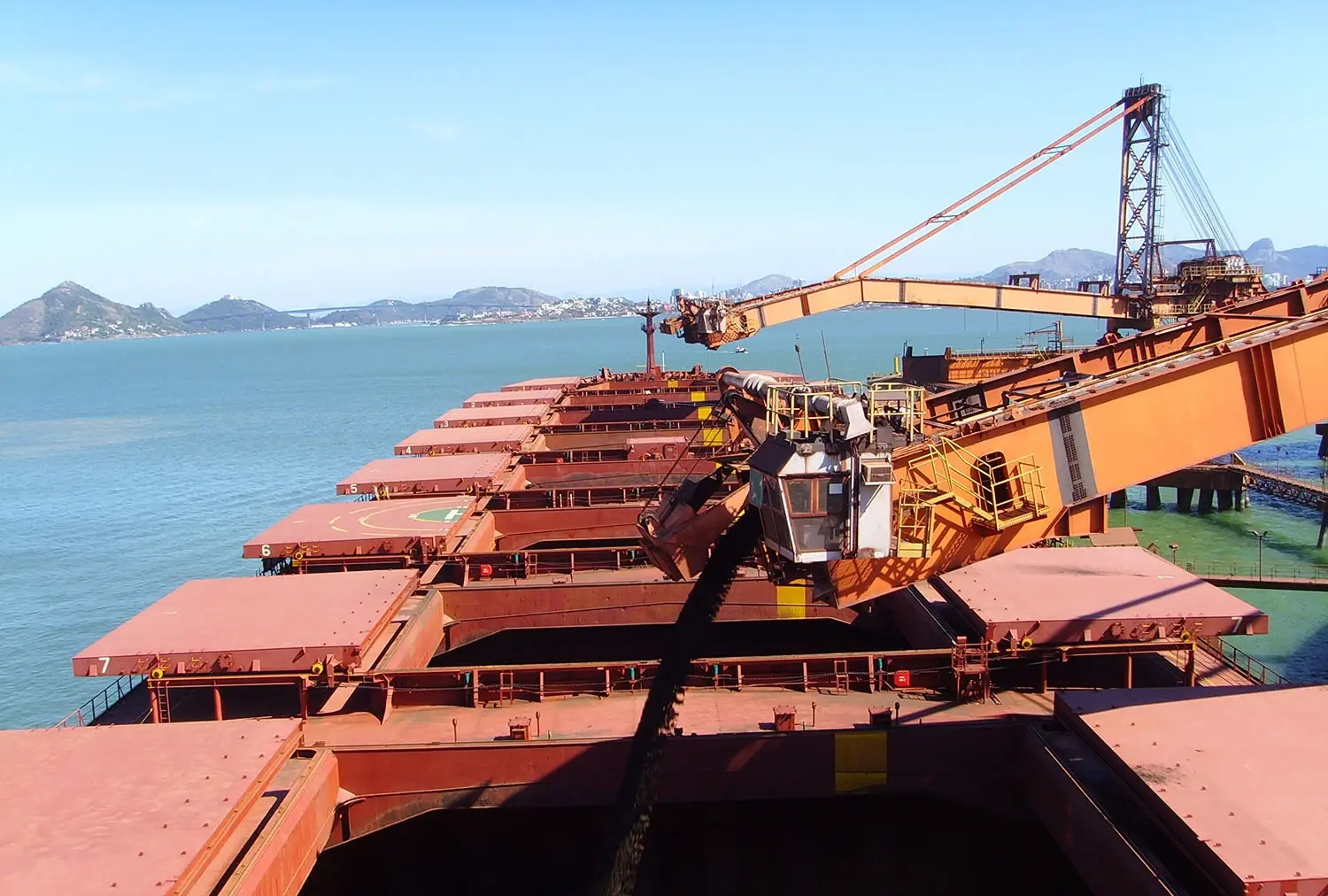
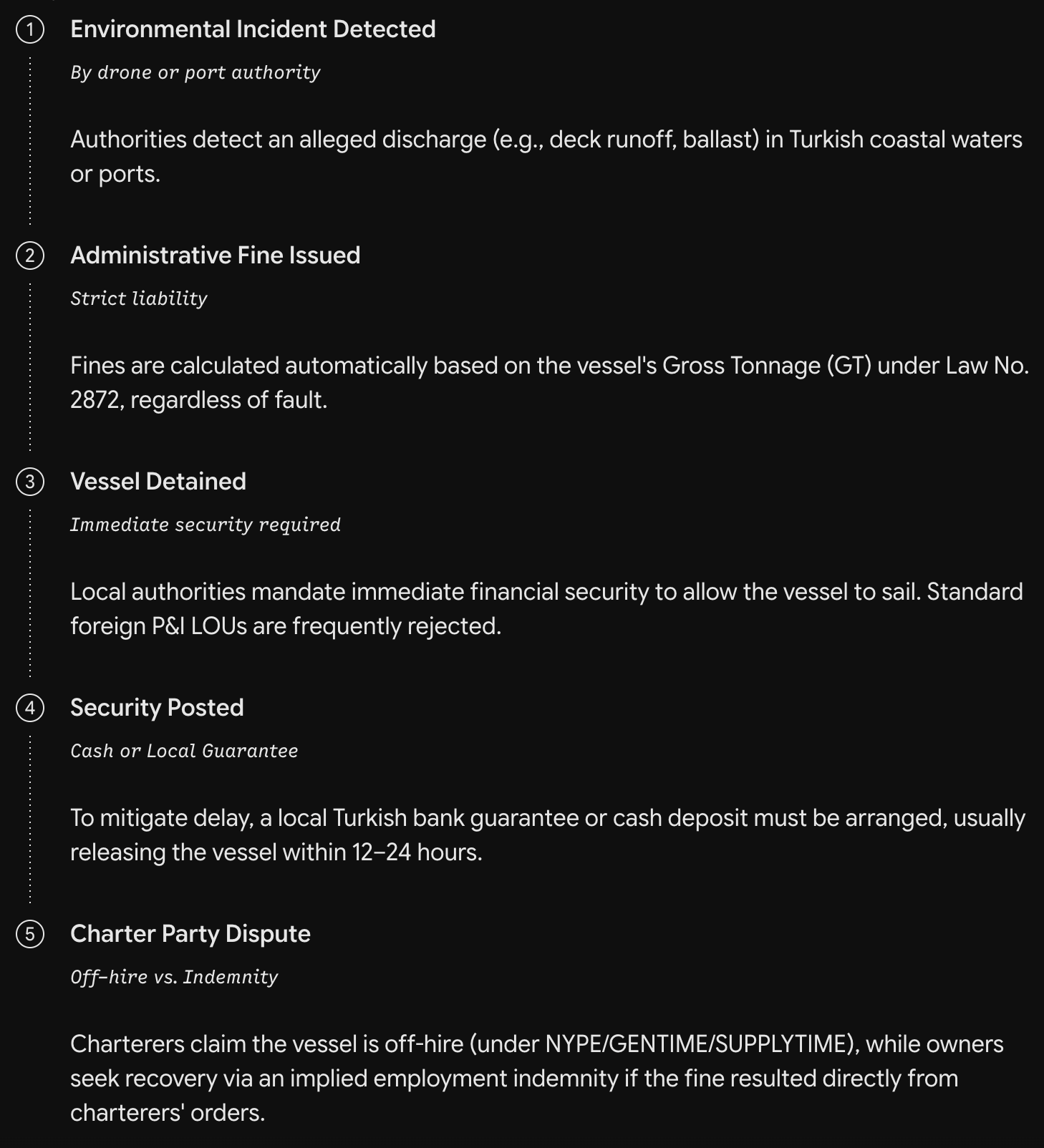
Turkish environmental protection under Environmental Law No. 2872 is among the strictest globally. Local Metropolitan Municipalities and the Coast Guard enforce strict, non-fault administrative fines for any suspected discharge (bilge water, scrubber washwater, deck runoffs, or ballast discharge).
The Security Challenge: Rejection of Club LOUs
When a fine is issued, Turkish authorities typically detain the vessel immediately until payment is secured. A major operational hurdle is that Turkish administrative bodies routinely reject standard P&I Club Letters of Undertaking (LOUs). They require immediate cash transfer or an unconditional bank guarantee issued by a Turkish-domiciled bank.
Legal Action Sequence for Environmental Detentions
4. Black Sea Operations & The Shadow of the Ukraine War
The ongoing Russia-Ukraine conflict has radically altered the legal and operational landscape for shipping beyond the Bosphorus. The entire Black Sea and Sea of Azov are classified as Listed Areas by the Joint War Committee (JWC), triggering intense scrutiny and additional costs.
Montreux Convention Article 19: The Closed Sea
Days after the invasion in February 2022, Turkey invoked Article 19 of the Montreux Convention, effectively classifying the conflict as a war and closing the Straits to belligerent warships. While commercial shipping retains the right of free passage, the geopolitical fallout has led to intense administrative scrutiny:
- Sanctions & Price Cap Checks: Turkey strictly monitors crude oil and refined product shipments. Vessels must provide valid Protection and Indemnity (P&I) attestations confirming that Russian oil cargoes comply with G7 price caps. Failure to provide this 72 hours before transit leads to immediate documentary detention.
- The Shadow Fleet: Heightened Turkish customs inspections aim to identify older, under-insured vessels involved in sanctioned trade, leading to slower transit times for all conventional shipping.
English Law War Risk Mechanisms
Operating in the Black Sea requires the integration of BIMCO's CONWARTIME 2013 (or the updated 2030 version) into time charters:
- Right of Refusal: If a Black Sea port becomes imminently dangerous due to missile strikes, GPS spoofing, or floating sea mines, CONWARTIME grants the shipowner the right to refuse the charterer's orders and request a safer alternative port.
- Additional Premiums (AP): If the owner agrees to proceed into the JWC Listed Area, the charterer is strictly liable to pay all Additional Premiums (AP) for Hull & Machinery and War Risk insurances, as well as mandatory crew bonuses.
5. Key BIMCO Clauses and Tailored Turkish Waters Riders
To prevent costly London arbitration, standard BIMCO time charters must be heavily amended with bespoke rider clauses tailored to the realities of Turkish waters and the Black Sea:
- BIMCO Straits Transit Waiting Clause: Explicitly stipulates that waiting time for Turkish Straits transit queues, pilotage availability, and daylight transit slots shall be for the charterer’s account, with the vessel remaining on-hire throughout.
- Turkish Environmental Security Rider: Establishes a mandatory timeframe (e.g., 24 hours) for posting cash or Turkish bank security to lift administrative arrests, specifying which party funds the deposit pending final dispute resolution to avoid prolonged off-hire.
- SUPPLYTIME Turkish Operations Amendment: For offshore vessels, language must be inserted clarifying that state-issued administrative fines are excluded from the standard knock-for-knock property/personnel provisions, allocating liability specifically to the party whose operational sphere caused the breach.
- BIMCO CONWARTIME & Sanctions Clause: Mandates that charterers provide all required P&I, price cap attestations, and flag-state entry documents well in advance of Straits entry, while clearly allocating the cost of Black Sea War Risk Additional Premiums to the charterer.
While standard BIMCO forms provide a robust commercial foundation under English law, the unique regulatory, environmental, and geopolitical climate of Turkish waters demands proactive contractual foresight. By embedding these tailored riders into charter parties, maritime operators can bridge the gap between English legal principles and strict local enforcement; safeguarding their commercial interests, preventing costly administrative detentions, and ensuring smoother operations through one of the world's most critical maritime chokepoints.